PRÁTICA COM QUESTÕES OFICIAIS
Questão 41 do ITA 2027
Texto-base das questões 40 a 42 · 1ª fase
The Secret Agent: ‘truly special’ Brazilian thriller barely puts ‘a foot wrong’
Wagner Moura is ‘soulful and seductive’ in starring role as an academic on the run
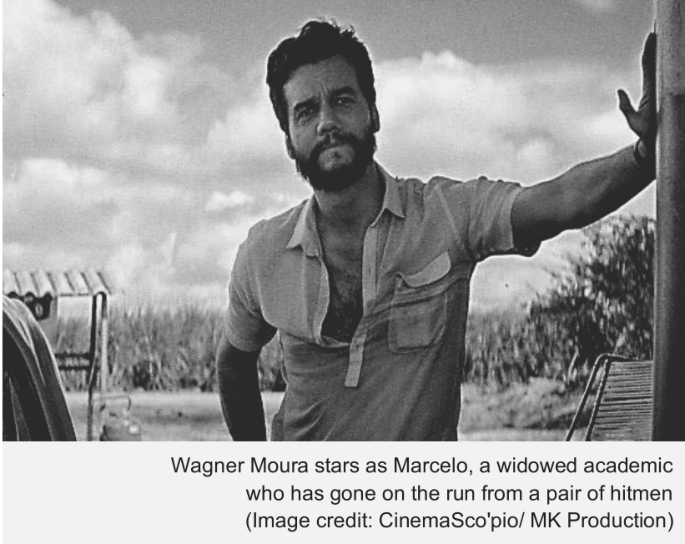
Set during Brazil’s military dictatorship in the 1970s, this political thriller is “populated by so many characters”, you may despair of keeping track of who is who, said Deborah Ross in The Spectator. But “do hang on in there”, as it repays the effort. Justly nominated for four Oscars, this is a “truly special” (if rather sprawling) film.
Wagner Moura (known for playing Pablo Escobar in the Netflix hit “Narcos”) stars as Marcelo, a widowed academic who has gone on the run from a pair of hitmen. Quite why they are targeting him isn’t initially clear but there’s a lot else to think about in the meantime: there is a “hitman hired by the hitmen”; there’s a corrupt police chief; there’s a “head-scratcher” of a sequence in which a human leg “comes to life and kicks gay people”. It is, in sum, a heady mix, but it barely puts “a foot wrong”, and the performances are superb.
“If you’re expecting a Brazilian ‘Bourne’, forget it,” said Tom Shone in The Sunday Times. “For a film about a man shadowed by two assassins, ‘The Secret Agent’ has a daringly languid pace”. Gradually, “a disquieting paranoia begins to creep into everything” until “even the sunlight seems off”.
Fonte: Ross, Deborah. The Spectator; Shone, Tom. The Sunday Times. Disponível em https://theweek.com/culture-life/film/the-secret-agent-truly-special-brazilian-thriller-barely-puts-a-foot-wrong. Adaptado.
Based on the text, the reviewer’s description of the film’s pacing and tonal shifts suggests that they ULTIMATELY serve to
- Aemphasize stylistic experimentation at the expense of narrative coherence and audience engagement.
- Bprovide intermittent relief from tension, thereby making the film more accessible to a broader audience.
- Creinforce the film’s unsettling atmosphere by gradually destabilizing the viewer’s sense of narrative and emotional certainty.
- Dcreate a contrast between humor and tension that ultimately reduces the overall dramatic impact of the narrative.
- Ehighlight the protagonist’s psychological transformation as the central focus of the narrative progression.
Reportar erro na questão
Resolução comentada
A questão pede a função final do ritmo e das mudanças de tom, segundo a descrição do crítico. Vamos aos trechos decisivos.
-
Tom Shone diz que o filme tem um ritmo "daringly languid" (ousadamente lento), ao contrário de um thriller de ação como "Bourne". Ou seja, a tensão não vem de velocidade.
-
Em seguida, ele afirma que, aos poucos, "a disquieting paranoia begins to creep into everything" (uma paranoia perturbadora começa a se infiltrar em tudo) e que "even the sunlight seems off" (até a luz do sol parece estranha). A palavra gradually mostra que o efeito é cumulativo.
-
Deborah Ross acrescenta a mistura de elementos: vários personagens, a trama obscura e a cena surreal da perna que ganha vida. Isso gera desorientação, mas ela diz que o conjunto "barely puts a foot wrong", isto é, funciona.
Juntando: o ritmo lento e as oscilações de tom desestabilizam aos poucos o espectador e criam uma atmosfera inquietante. Isso corresponde à alternativa C.
Alternativa C.
Por que as outras alternativas estão erradas
- AOs críticos elogiam o filme ("truly special"), não apontam falta de coerência ou de engajamento.
- BO texto fala de tensão crescente e paranoia, não de alívio intermitente nem de acessibilidade.
- DNão há contraste humor-tensão que reduza o impacto; o efeito descrito é de intensificação do mal-estar.
- EO texto não trata de transformação psicológica do protagonista; o foco é a atmosfera.
Assuntos: interpretação de texto, crítica de cinema.
Reportar erro na resolução
Ver como caiu na prova
Fonte: ITA 2027 · 1ª fase. Prova oficial ↗