PRÁTICA COM QUESTÕES OFICIAIS
Questão 31 (Português e Inglês) da 2ª fase do IME 2026
Texto-base das questões 31 a 37 · Português e Inglês
Text 2
The Impact of Electric Vehicles on the Automotive Industry
Looking at the environmental, economical, and political impact of electric vehicles.
By Patrick Peterson of GoodCar
Electric vehicles (EVs) have had a remarkable glow-up in a relatively short period. It wasn’t so long ago that public opinion labeled them as overpriced, inefficient options with poor mileage to boot. However, rising climate concerns and the volatility of gas prices have pushed more people to refresh their understanding of the technology. While misinformation is rampant, people’s faith in EVs has risen enough that over 40 percent of Americans would seriously consider making the switch. Growing interest pressures manufacturers to reorganize their supply chains with a stronger emphasis on EVs. This sounds simple, but there are significant differences in EV development compared to gas-powered cars. The longstanding dominance of gas-powered vehicles makes most people believe it was the only option up until now. But that’s wrong. The idea of electric vehicles has been experimented with since the early 1800s. Robert Anderson is credited for inventing the first electric vehicle. The Scottish inventor used primary cells (single-use batteries) to power a motor he fixed to a carriage. This idea for a “horseless carriage” was a pivotal moment in history that gave future inventors a foundation to work on. Jump to today, and EVs have skyrocketed in popularity. They’ve proven to be a more sustainable option and have a lower overall cost than gas-powered cars. Opponents of adopting EVs argue that battery-powered vehicles aren’t entirely emission-free. And they’re right. Carbon emissions are created during the manufacturing process and when charging the battery. This is because fossil fuels are required to mine the minerals used in batteries and to generate the power used to recharge them. However, these emissions are substantially lower than those released by cars using an internal combustion engine. A study performed by MIT found that electric-powered cars created about 25 percent fewer carbon emissions per mile than a gasoline alternative. This study even assumed the cars were in less eco-friendly states. When Washington was used as the backdrop, the study reported that an EV would create 61 percent fewer emissions. This is due to Washington drawing a lot of its energy from hydropower. Norway, Europe’s biggest EV market, takes a similar approach. Over half of Americans are willing to pay more for sustainably responsible products. A comparable number of citizens say the same thing about gasoline. This support for greener brands shows the automotive industry how the future will look. Manufacturers’ supply and production procedures must start adapting now to prepare for the future. There are even various government incentives to make the process easier.
Adapted from: unsustainable in https://www.unsustainablemagazine.com/impact-of-electric-vehicles/ [Accessed on 9th July 2025].
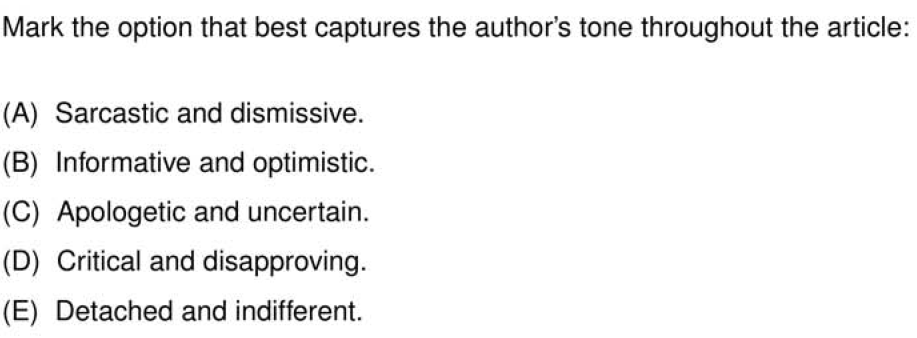
Mark the option that best captures the author's tone throughout the article:
- ASarcastic and dismissive.
- BInformative and optimistic.
- CApologetic and uncertain.
- DCritical and disapproving.
- EDetached and indifferent.
Reportar erro na questão
Resolução comentada
Para identificar o tom de um texto, observe o vocabulário e a postura do autor diante do assunto.
-
O autor apresenta fatos e dados: a história do carro elétrico (Robert Anderson, início do século XIX), o estudo do MIT (cerca de 25% menos emissões por milha) e o exemplo de Washington (61% menos). Isso dá ao texto um caráter informativo.
-
O vocabulário é positivo em relação aos EVs: "remarkable glow-up", "skyrocketed in popularity", "more sustainable option", "lower overall cost". Além disso, o texto termina mostrando que o futuro está nas marcas mais verdes e que há incentivos governamentais. Isso revela otimismo.
-
Mesmo ao tratar dos opositores, o autor concede: "And they're right" (emissões existem na fabricação e na recarga). Em seguida, rebate com dados ("However, these emissions are substantially lower"). A postura é equilibrada e argumentativa, sem ironia nem hostilidade.
-
Não há sarcasmo, pedido de desculpas, incerteza, crítica reprovadora ou indiferença: o autor claramente se engaja e defende a mudança ("must start adapting now").
O tom que melhor resume o artigo é informativo e otimista.
Alternativa B.
Por que as outras alternativas estão erradas
- ANão há ironia nem desprezo; até os opositores são tratados com respeito ("And they're right").
- CO autor não pede desculpas e é assertivo, apoiando-se em dados e estudos.
- DA crítica aparece só em relação a mitos antigos sobre EVs; o tom geral é favorável, não reprovador.
- EO autor demonstra envolvimento e defende que a indústria se adapte já, o oposto de indiferença.
Assunto: Inferência e ponto de vista do autor.
Reportar erro na resolução
Ver como caiu na prova
Fonte: IME 2ª fase 2026 · Português e Inglês. Prova oficial ↗