PRÁTICA COM QUESTÕES OFICIAIS
Questão 85 (1º semestre) da UFG 2014 (inglês)
Read the text below and answer questions 85, 86 and 87. · 1ª etapa
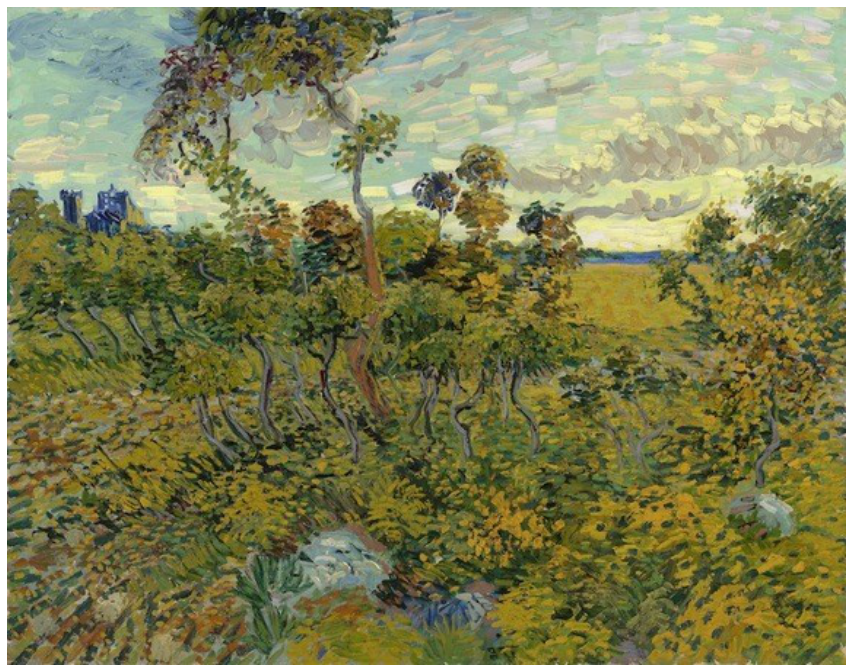
Long-Lost Van Gogh Painting Discovered
by Megan Gannon, September 09, 2013
A major new painting by Vincent van Gogh has been discovered. It is called, “Sunset at Montmajour”.
The Van Gogh Museum in Amsterdam unveiled the long-lost landscape painting today (Sept. 9) following an investigation that showed the style, technique, paint, canvas and subject matter matched with other works from the peak of the Dutch artist's career.
The painting originally belonged to the collection of Theo van Gogh, the artist's brother, and was sold in 1901. Shortly thereafter, the artwork ended up in the hands of a Norwegian collector who tucked it away in his attic after it was declared a fake.
As recently as the 1990s, the painting's authenticity was rejected by the museum. But now the researchers say, “Stylistically and technically speaking, there are plenty of parallels with other paintings by van Gogh from the summer of 1888”.
The newly identified painting also shows signs of the same discoloration that has come to characterize van Gogh's work in recent years. The bright yellows in many of his paintings have been turning into muddy browns.
The researchers even found two references to the work in van Gogh's letters, in which he is critical of the painting and declared it unsuccessful.
Disponível em: <http://LiveScience.htm>. Acesso em: 12 set. 2013. (Adaptado).
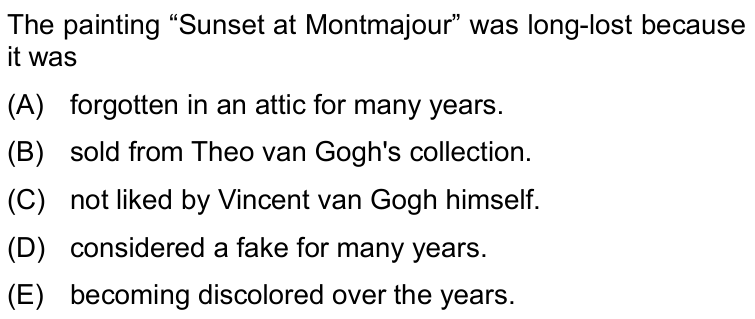
The painting “Sunset at Montmajour” was long-lost because it was
- Aforgotten in an attic for many years.
- Bsold from Theo van Gogh's collection.
- Cnot liked by Vincent van Gogh himself.
- Dconsidered a fake for many years.
- Ebecoming discolored over the years.
Você já respondeu questões neste aparelho. Crie sua conta grátis para guardar o histórico e refazer as que errou.
Resposta salva no seu histórico.
Reportar erro na questão
Resolução comentada
A pergunta é sobre o motivo de o quadro ter ficado "long-lost" (perdido por muito tempo). Precisamos achar no texto a causa do sumiço, e não apenas fatos ligados ao quadro.
- O texto diz que a obra pertencia a Theo van Gogh e foi vendida em 1901. Isso é só a origem da trajetória, não explica o sumiço.
- Em seguida: "the artwork ended up in the hands of a Norwegian collector who tucked it away in his attic after it was declared a fake". Ou seja, o colecionador guardou ("tucked away") o quadro no sótão depois de ele ser declarado falso.
- A ordem é: foi declarado falso → foi guardado no sótão → ficou perdido. Logo, a causa original do desaparecimento é a suposta falsidade; o sótão é a consequência.
- O texto reforça isso ao dizer que, até os anos 1990, o museu rejeitava a autenticidade da pintura. Por isso ninguém a procurou nem a exibiu.
- A crítica do próprio Van Gogh em cartas e o amarelecimento (descoloração) das tintas são informações sobre a identificação da obra, sem relação com o sumiço.
Portanto, o quadro ficou perdido porque foi considerado falso por muitos anos.
Alternativa D.
Pegadinha: A alternativa A engana porque o sótão aparece explicitamente no texto, mas ele vem depois de o quadro ser declarado falso, que é a verdadeira causa.
Por que as outras alternativas estão erradas
- AO sótão é consequência de o quadro ter sido declarado falso; a causa do sumiço é a suposta falsidade.
- BA venda da coleção de Theo em 1901 é só um fato do percurso, não explica por que ficou perdido.
- CVan Gogh criticar a obra nas cartas serviu para identificá-la, não a fez desaparecer.
- EA descoloração é um sinal que ajudou a confirmar a autoria, não causou o sumiço.
Assunto: Informações explícitas e detalhes.
Reportar erro na resolução
Ver como caiu na prova
Fonte: UFG 2014 · 1º semestre · 1ª etapa. Prova oficial ↗