PRÁTICA COM QUESTÕES OFICIAIS
Questão 22 da FMABC 2026
Leia o texto para responder às questões de 21 a 25. · Conhecimentos Gerais
Global population growth is expected to slow between now and 2100. The population more than tripled in the last 75 years, but the United Nations (UN) expects it to grow by only about 1.9 billion between now and 2100 (from 8.2 billion to 10.2 billion). The population is expected to peak at 10.3 billion in 2084 and then decline to 10.2 billion through the end of the century.
The world’s three most populous countries in 2025 are expected to have radically different trajectories in the coming decades. Those countries are India (which has about 1.5 billion people today), China (1.4 billion) and the United States (347 million). India is expected to continue growing until it peaks at 1.7 billion people in 2061. Then it’s expected to gradually decline to 1.5 billion by 2100. China’s population has begun to shrink. It is projected to fall sharply to 633 million by 2100. Meanwhile, the United States (US) population is expected to grow slowly and steadily to 421 million by 2100.
Also, the world’s population is expected to get older. The world’s median age is projected to rise to 42 by 2100, up from 31 today and 22 in 1950. The number of people ages 65 and older is expected to more than double, from 857 million today to 2.4 billion by 2100. That would increase their share of the global population from 10% to 24%. By 2100, the world is expected to have roughly equal shares of people under 25 and people 65 and older. That would be a major shift from today, when younger people outnumber older adults by about four-to-one. In 1950, that gap was even wider, at about ten-to-one.
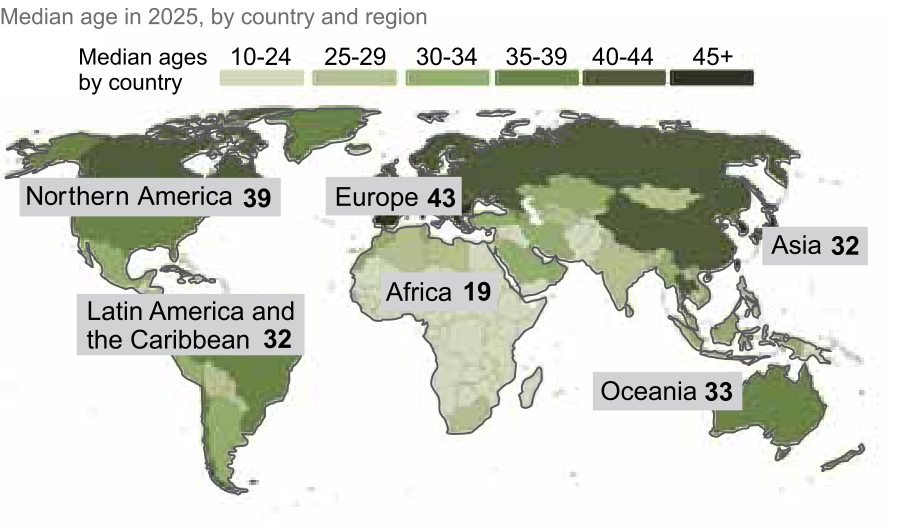
Looking at countries rather than regions, the median age in the US is 39. It ranks among the oldest third of countries globally but is slightly younger than many high-income countries in Europe and East Asia.
(Manolo Corichi et al. www.pewresearch.org, 09.07.2025. Adaptado.)
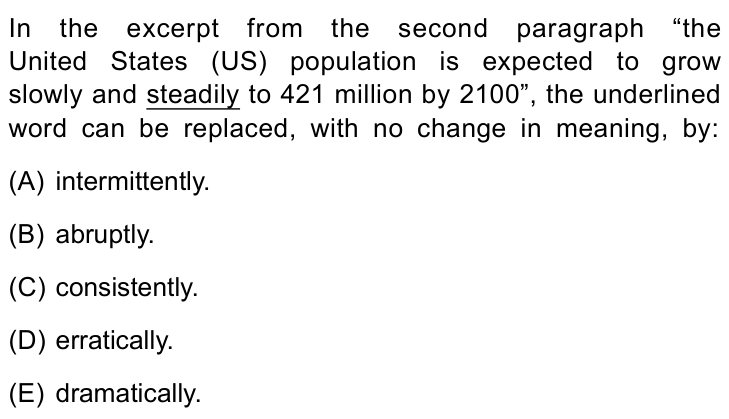
In the excerpt from the second paragraph “the United States (US) population is expected to grow slowly and steadily to 421 million by 2100”, the underlined word can be replaced, with no change in meaning, by:
- Aintermittently.
- Babruptly.
- Cconsistently.
- Derratically.
- Edramatically.
Você já respondeu questões neste aparelho. Crie sua conta grátis para guardar o histórico e refazer as que errou.
Resposta salva no seu histórico.
Reportar erro na questão
Resolução comentada
"Steadily" é o advérbio de steady: algo que ocorre de forma contínua, num ritmo regular, sem interrupções nem grandes variações. No trecho, a população dos EUA vai crescer "slowly and steadily", ou seja, devagar e de modo constante até 421 milhões em 2100.
Basta procurar a opção com o sentido de "de maneira constante, regular":
- Intermittently: de forma intermitente, com pausas. É o oposto de contínuo.
- Abruptly: de repente, bruscamente. Contradiz "slowly".
- Consistently: de modo constante, sem variação. É o sinônimo mais próximo de "steadily".
- Erratically: de forma irregular e imprevisível. Também contradiz a ideia de regularidade.
- Dramatically: de modo drástico e marcante. Não combina com crescimento lento.
Só "consistently" mantém o sentido de crescimento lento e regular.
Alternativa C.
Por que as outras alternativas estão erradas
- AIntermittently significa com interrupções, o oposto de contínuo.
- BAbruptly indica mudança brusca, incompatível com crescimento lento e regular.
- DErratically significa de modo irregular e imprevisível, contrário a steadily.
- EDramatically indica mudança grande e marcante, contradizendo slowly.
Assunto: Vocabulário em contexto e falsos cognatos.
Reportar erro na resolução
Ver como caiu na prova
Fonte: FMABC 2026 · Conhecimentos Gerais. Prova oficial ↗