PRÁTICA COM QUESTÕES OFICIAIS
Questão 77 da UFPR 2006 (inglês)
Texto-base das questões 77 a 80 · 1ª fase
Winter
Winter influences nature, people and even history. The winter of 1941 caused the Nazis many casualties from lack of cold weather equipment and played a part in the failure of Operation Barbarossa, the Nazi march on Moscow.
In animals and plants, winter plays an important role in their life cycles. Some fur-coated mammals grow a heavier fur coat during the winter. This improves the heat-retention qualities of the fur. The coat is then shed following the winter season to allow better cooling. The heavier winter coat makes this season a favorite for trappers who seek more profitable skins. Snow also affects the ways animals behave, as many take advantage of the insulating properties of snow by burrowing in it. Mice and voles typically live under the snow layer.
Annual plants never survive the winter. As for perennial plants, many small ones profit from the insulating effects of snow by being buried in it. Larger plants, particularly deciduous trees, usually let their upper part die, but their roots are still protected by the snow layer.
Passing seasons change the habits and moods of people. Around winter months, a gloominess, called “winter blues” or “February blahs” or “Holiday depression” – during November and December – is informally noted amongst people. The severest cases of this type of depression are diagnosed as seasonal affective disorder (SAD). Symptoms include sleeping more, tiredness, depression, and physical aches. Although cases include genetic disposition and stress, the prevailing environmental influence is decreased exposure to light due to winter weather patterns.
(http:// en. Wikipedia.org/wiki/Winter)
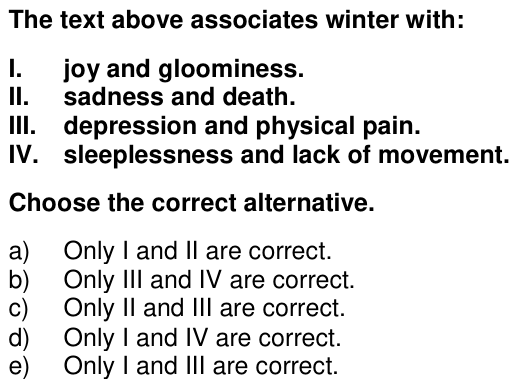
The text above associates winter with:
I. joy and gloominess.
II. sadness and death.
III. depression and physical pain.
IV. sleeplessness and lack of movement.
Choose the correct alternative.
- AOnly I and II are correct.
- BOnly III and IV are correct.
- COnly II and III are correct.
- DOnly I and IV are correct.
- EOnly I and III are correct.
Você já respondeu questões neste aparelho. Crie sua conta grátis para guardar o histórico e refazer as que errou.
Resposta salva no seu histórico.
Reportar erro na questão
Resolução comentada
Para verificar as afirmações, você precisa distinguir as associações presentes no texto daquelas que apenas parecem possíveis no inverno.
A afirmação I está incorreta. O texto menciona “gloominess” (melancolia), mas não associa o inverno à alegria (“joy”). Como a afirmação reúne os dois sentimentos, ela não pode ser considerada correta.
A afirmação II está correta. A tristeza aparece na descrição da melancolia e da depressão de inverno. Já a morte está presente tanto nas baixas sofridas pelos nazistas quanto na passagem “Annual plants never survive the winter”: “Plantas anuais nunca sobrevivem ao inverno”.
A afirmação III está correta. Entre os sintomas apresentados estão “depression, and physical aches”, isto é, “depressão e dores físicas”. Há, portanto, apoio direto para os dois elementos da afirmação.
A afirmação IV está incorreta. “Sleeplessness” significa “insônia”, mas o texto informa “sleeping more”, ou seja, “dormir mais”. Além disso, cansaço não equivale necessariamente à falta de movimento mencionada na afirmação.
Assim, somente II e III correspondem às associações feitas pelo texto.
Alternativa C.
Pegadinha: A afirmação IV pode enganar ao aproximar cansaço de falta de movimento, mas também troca o aumento do sono mencionado no texto por insônia.
Por que as outras alternativas estão erradas
- AInclui I, embora o texto não associe o inverno à alegria, e exclui III, que está correta.
- BInclui IV, que menciona insônia, apesar de o texto falar em dormir mais, e exclui II.
- DReúne as duas afirmações incorretas: não há associação com alegria nem com insônia.
- EInclui indevidamente I e deixa de fora II, sustentada pelas referências à tristeza e à morte.
Assunto: Informações explícitas e detalhes.
Reportar erro na resolução
Ver como caiu na prova
Fonte: UFPR 2006 · 1ª fase. Prova oficial ↗