PRÁTICA COM QUESTÕES OFICIAIS
Questão 7 (Inglês) do ITA 2010
As perguntas de 4 a 8 correspondem ao texto a seguir: · Inglês
BUENOS AIRES
The discreet rise of vegetarianism in the carnivorous capital of the world
VISITORS to Palermo, a well-heeled neighbourhood of Buenos Aires, are used to having their hair primped to perfection and their body fat measured. That goes both for the humans who frequent the trendy boutiques and spas and for the prize Aberdeen Angus cows that arrive at the agricultural show held there every July. This year, the visiting ranchers are preoccupied by the beef industry's informal pessimism index—the share of young cows that farmers slaughter for meat rather than keep for breeding. It has recently hit a three-decade high, owing to recession, drought and government price-controls. To add culinary insult to economic injury, vegetarianism is spreading in Argentina.
In the world's most carnivorous country, vegetarians used to be a tiny band of masochists. But when the economy collapsed in 2002, a recently formed Argentine Vegetarian Union gained members, and veggie restaurants sprouted. The main reason is cost. Vegetarian restaurants have lower overheads since they don't need freezers, says Marisa Ledesma, one of the owners of Bio Restaurante, a smart eatery.
Now the economy is in recession once again. That seems to have led more omnivores to abandon meat, says Roberto Moyano, the manager of La Esquina de las Flores, the capital's oldest vegetarian restaurant. And as they munch soya steaks, diners relish new evidence of the health benefits of eating less red meat.
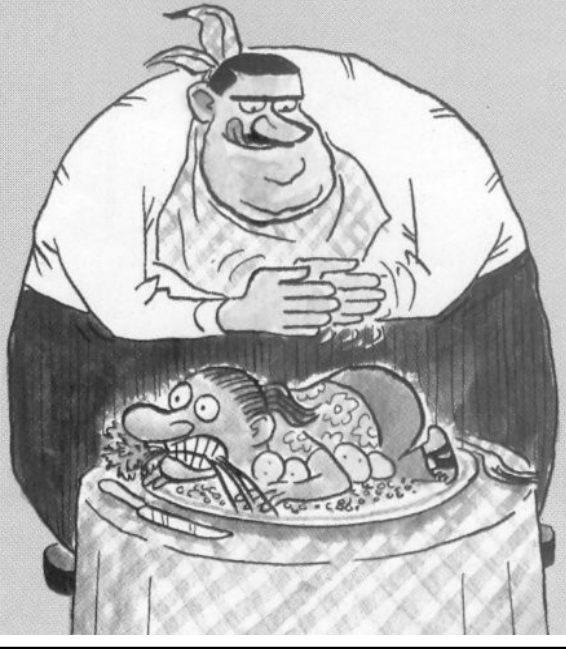
This year, the industry reckons, the average Argentine will get through 57 kilos of beef. That is down from 68 kilos last year, but it still means many more asados than the 41 kilos scoffed by Uruguayans, the world's second-biggest beef-eaters. Barrel-bellied carnivores are still the norm, and vegetarianism remains an isolated gesture of gastronomic defiance. Your correspondent recently came across a note scribbled on a paper napkin in a Palermo café which read: “In Argentina vegetarians are for eating.”
The Economist, de 8/8/2009.
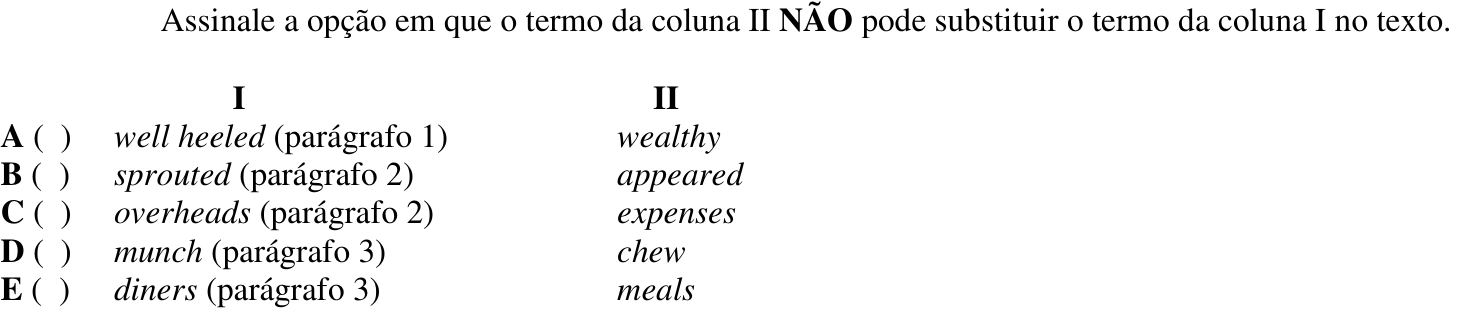
Assinale a opção em que o termo da coluna II NÃO pode substituir o termo da coluna I no texto.
- Awell heeled (parágrafo 1) — wealthy
- Bsprouted (parágrafo 2) — appeared
- Coverheads (parágrafo 2) — expenses
- Dmunch (parágrafo 3) — chew
- Ediners (parágrafo 3) — meals
Você já respondeu questões neste aparelho. Crie sua conta grátis para guardar o histórico e refazer as que errou.
Resposta salva no seu histórico.
Reportar erro na questão
Resolução comentada
A questão pede o par em que a palavra da coluna II não funciona como sinônimo da palavra da coluna I no contexto. Vamos conferir cada um.
- Well-heeled é um adjetivo que quer dizer "rico, abastado". Em "a well-heeled neighbourhood", wealthy tem o mesmo sentido. A troca funciona.
- Sprouted é o verbo "brotar". Em "veggie restaurants sprouted", o sentido é que os restaurantes vegetarianos surgiram rapidamente, e appeared preserva essa ideia. A troca funciona.
- Overheads são os custos fixos de manter um negócio (aluguel, energia, equipamentos). Em "lower overheads", expenses (despesas) cabe bem. A troca funciona.
- Munch é "mastigar com vontade". Em "as they munch soya steaks", chew (mastigar) mantém o sentido. A troca funciona.
- Diners, no texto, são as pessoas que comem no restaurante, ou seja, os clientes. Meals significa "refeições", que são o alimento, não as pessoas. O sentido muda, e a frase deixa de fazer sentido: "refeições relishing evidence". Aqui o par falha. O sinônimo correto seria customers ou patrons.
Portanto, só o item E não permite a substituição.
Alternativa E.
Pegadinha: A alternativa E engana quem confunde diners (clientes de restaurante) com dinners/meals (refeições), por semelhança de forma.
Por que as outras alternativas estão erradas
- AWell heeled e wealthy são sinônimos (rico, abastado), então a troca é possível.
- BSprouted aqui é usado de forma figurada, como "surgiram", e appeared serve.
- COverheads são custos fixos, e expenses (despesas) é equivalente no contexto.
- DMunch e chew significam mastigar, então a troca é aceitável.
Assunto: Vocabulário em contexto e falsos cognatos.
Reportar erro na resolução
Este texto também caiu em
Ver como caiu na prova
Fonte: ITA 2010 · Inglês. Prova oficial ↗