PRÁTICA COM QUESTÕES OFICIAIS
Questão 40 (1º exame) da FUVEST 2001
Texto para as questões de 37 a 40 · V
MICHAEL D. COE’S Breaking the Maya Code. Revised paperback edition. First published 1992. Thames & Hudson, New York, 1999 ($18.95).
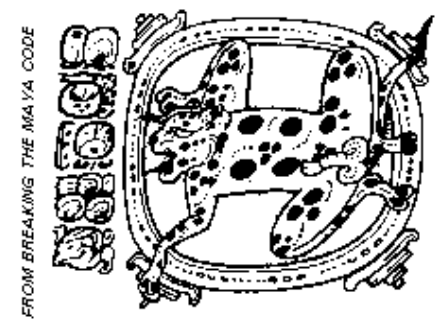
The decipherment of the Maya script was, Coe states, "one of the most exciting intellectual adventures of our age, on a par with the exploration of space and the discovery of the genetic code." He presents the story eloquently and in detail, with many illustrations of the mysterious Maya inscriptions and the people who tried to decipher them. Most of the credit, he says, goes to the late Yuri V. Knorosov of the Russian Institute of Ethnography, but many others participated. They did not always agree, and some of them went up blind alleys. Coe— emeritus professor of anthropology at Yale University—vividly describes the battles, missteps and successes. What is now established, he writes, is that “the Maya writing system is a mix of logograms and syllabic signs; with the latter, they could and often did write words purely phonetically.”
SCIENTIFIC AMERICAN
APRIL 2000
Which of these statements is true according to the passage?
- AThere is still uncertainty as to whether the Mayas used syllabic signs.
- BThe Mayas invented a purely phonetic writing system.
- CSyllabic signs are evidence that the Mayas could match words and sounds.
- DScientists disagree about the major characteristics of the Maya writing system.
- ELogograms were used by the Mayas to write phonetically.
Você já respondeu questões neste aparelho. Crie sua conta grátis para guardar o histórico e refazer as que errou.
Resposta salva no seu histórico.
Reportar erro na questão
Resolução comentada
O trecho decisivo é a última frase: "the Maya writing system is a mix of logograms and syllabic signs; with the latter, they could and often did write words purely phonetically". Em português: o sistema maia mistura logogramas e sinais silábicos, e com estes últimos ("the latter") eles podiam escrever palavras de modo puramente fonético.
Conceitos: logograma é um sinal que representa uma palavra inteira; sinal silábico representa um som (sílaba). Escrever foneticamente é associar sinais a sons da fala.
Testando as alternativas:
- Incerteza sobre os sinais silábicos: o texto diz "What is now established", ou seja, isso está estabelecido.
- Sistema puramente fonético: o sistema é misto; só algumas palavras eram escritas de forma puramente fonética.
- Sinais silábicos como prova de que os maias relacionavam palavras e sons: é o que o texto diz, pois com eles escreviam fonética.
- Discordância sobre as características principais: o texto diz que os estudiosos discordaram ao longo do processo, mas o que hoje está estabelecido é justamente a natureza mista do sistema.
- Logogramas para escrever foneticamente: quem permite isso são os sinais silábicos ("the latter"), não os logogramas.
Portanto, a única afirmação verdadeira segundo o texto é a que liga os sinais silábicos à correspondência entre palavras e sons.
Alternativa C.
Pegadinha: A alternativa E engana ao trocar "the latter" (sinais silábicos) por logogramas, que são a primeira opção citada.
Por que as outras alternativas estão erradas
- AO texto diz que o uso de sinais silábicos está estabelecido ("What is now established"), não incerto.
- BO sistema é misto (logogramas e sinais silábicos), não puramente fonético.
- DA discordância foi do processo de decifração; o resultado atual, o sistema misto, é dado como estabelecido.
- EQuem permitia escrever foneticamente eram os sinais silábicos ("the latter"), não os logogramas.
Assunto: Informações explícitas e detalhes.
Reportar erro na resolução
Ver como caiu na prova
Fonte: FUVEST 2001 · 1º exame. Prova oficial ↗