PRÁTICA COM QUESTÕES OFICIAIS
Questão 23 (1ª fase) da UNESP 2023
Examine o gráfico e o mapa e leia o texto para responder às questões de 21 a 26. · Conhecimentos Gerais
In March 2022, parts of Antarctica have been 40 °C warmer than their March average
Antarctica, daily average temperature, Concordia station, °C
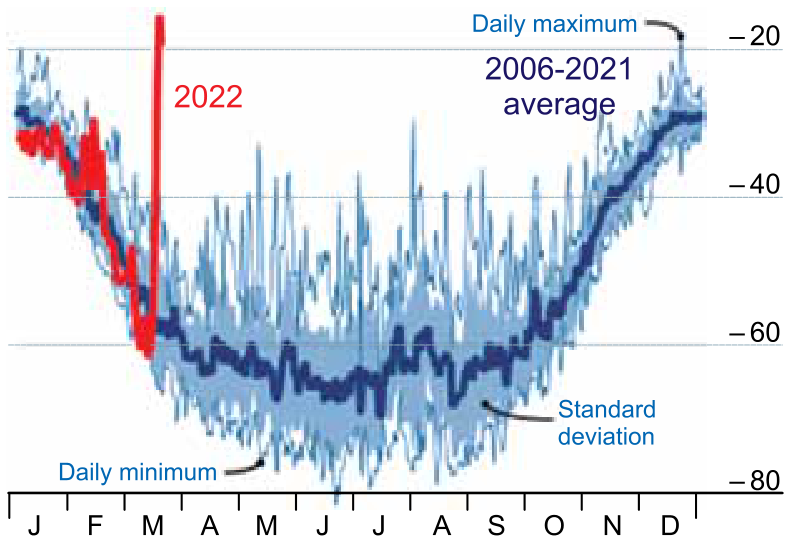
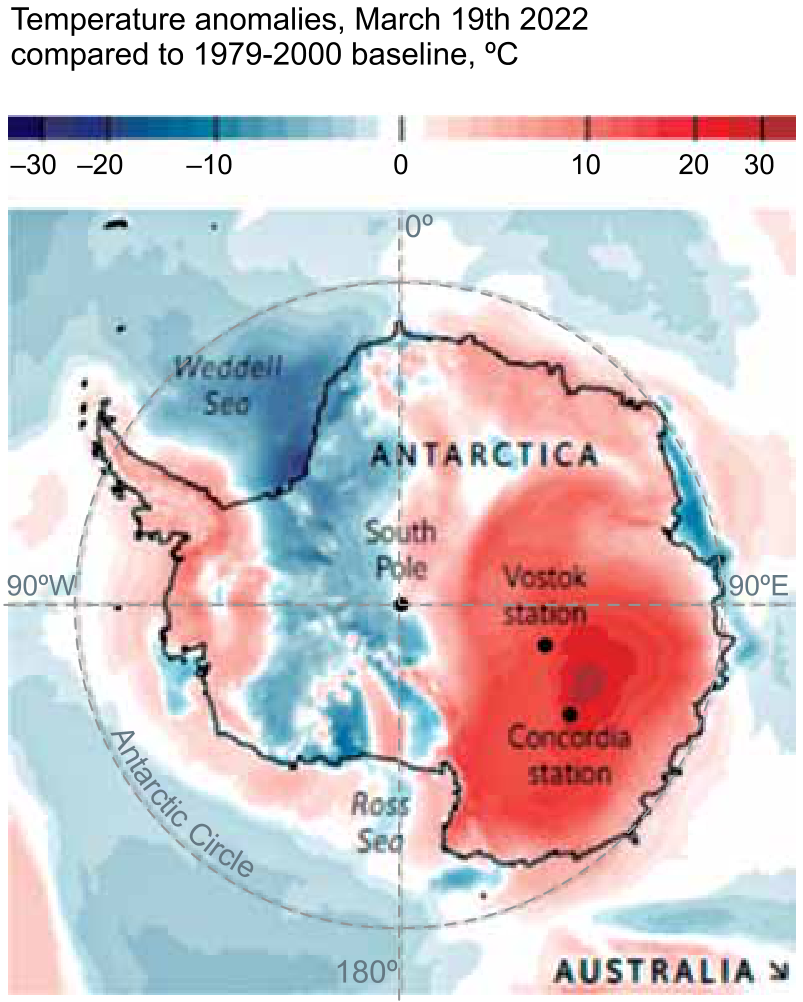
The Concordia research station is one of the most inhospitable places on Earth. At 3,000 m above sea level on the Antarctic Plateau, the temperature rarely rises above -25 °C even in the summer. In midwinter it can fall to around -80 °C. The air is painfully dry, and fingers, toes and noses can freeze in minutes. The dozen or so crew, mainly French and Italian, who live and work in the station would normally venture out only for essential work. But Concordia has recently experienced a heatwave. On March 18th the temperature reached a high of -11.8 °C — more than 40 °C warmer than the average for this time of year.
Similarly freakish weather was recorded across eastern Antarctica. Temperatures at the Russian-run Vostok research station rose to -17.7 °C, more than 15 °C above the previous record for March, set in 1967. Across the continent temperatures were 4.5 °C higher than usual (though in recent days they have returned to a normal range).
Meteorologists have attributed the latest heatwave to an atmospheric “river” of warm, damp air blowing towards Antarctica from the Southern Ocean near Australia. It is difficult to know whether climate change is to blame for one-off weather events. But over the past 65 years or so there has been an increase in the number of “high temperature” days at Antarctic stations.
Most regions of Antarctica have been spared global warming. In the late 20th century, a large hole opened up in the ozone layer above the South Pole. This has a regional cooling effect, which has offset much of the heating caused by rising concentrations of greenhouse gases in the atmosphere. Temperatures on the continent rarely climb above freezing, which preserves its vast ice sheets (although rising sea temperatures do threaten some areas). Even in the recent surge, temperatures stayed well below zero.
(www.economist.com, 24.03.2022. Adaptado.)
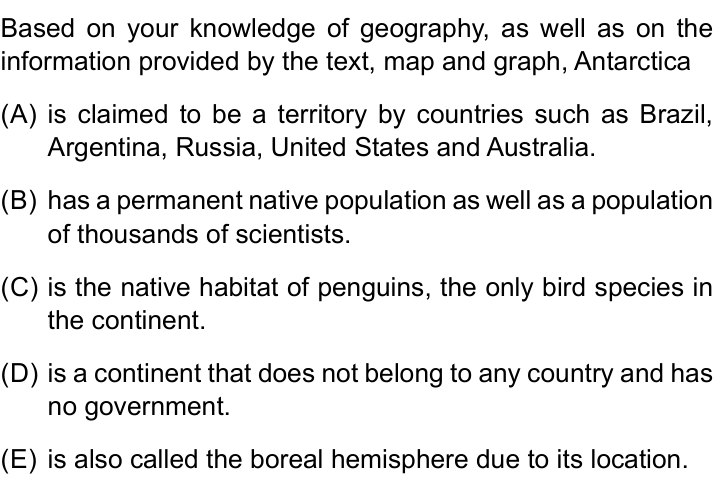
Based on your knowledge of geography, as well as on the information provided by the text, map and graph, Antarctica
- Ais claimed to be a territory by countries such as Brazil, Argentina, Russia, United States and Australia.
- Bhas a permanent native population as well as a population of thousands of scientists.
- Cis the native habitat of penguins, the only bird species in the continent.
- Dis a continent that does not belong to any country and has no government.
- Eis also called the boreal hemisphere due to its location.
Você já respondeu questões neste aparelho. Crie sua conta grátis para guardar o histórico e refazer as que errou.
Resposta salva no seu histórico.
Reportar erro na questão
Resolução comentada
A questão pede uma afirmação correta sobre a Antártida, com base no texto e em conhecimentos de geografia. Vamos testar cada ideia.
O continente é regido pelo Tratado da Antártida (1959), que o reserva a fins pacíficos e à pesquisa científica. O tratado congela as reivindicações territoriais: países como Argentina, Chile, Reino Unido, Austrália, Noruega, França e Nova Zelândia fizeram reivindicações, mas elas não são reconhecidas na prática. Assim, o continente não pertence a nenhum país e não tem governo próprio nem soberania de um único Estado. Ele é administrado de forma coletiva pelas partes do tratado.
O texto confirma o caráter científico: a estação Concordia tem cerca de uma dúzia de pesquisadores, franceses e italianos, e Vostok é russa. Isso mostra estações de vários países, sem população nativa.
Conferindo as demais:
- Brasil, Rússia e EUA não reivindicam território (mantêm só estações e se reservam o direito de fazê-lo).
- Não há população nativa permanente; os cientistas são temporários e somam poucos milhares.
- Pinguins não são a única ave: há também petréis, skuas e outras.
- A Antártida fica no hemisfério sul (austral), e não no boreal, que é o do Ártico.
Logo, a única afirmação aceitável é a de que o continente não pertence a nenhum país e não tem um governo.
Alternativa D.
Por que as outras alternativas estão erradas
- ABrasil, Rússia e Estados Unidos não reivindicam território antártico, e as reivindicações existentes estão congeladas pelo Tratado.
- BNão existe população nativa permanente na Antártida, apenas pesquisadores temporários.
- CPinguins não são a única ave do continente; há também skuas, petréis e outras espécies.
- EBoreal refere-se ao hemisfério norte; a Antártida está no hemisfério sul (austral).
Assunto: Estado, nação, fronteiras e separatismos.
Reportar erro na resolução
Ver como caiu na prova
Fonte: UNESP 2023 · Conhecimentos Gerais. Prova oficial ↗