PRÁTICA COM QUESTÕES OFICIAIS
Questão 73 da UFPR 2014 (inglês)
Texto-base das questões 73 a 77 · 1ª fase
Reading the world in 196 books
By Ann Morgan (Photo: Darren Russell) – BBC - 15 July 2013
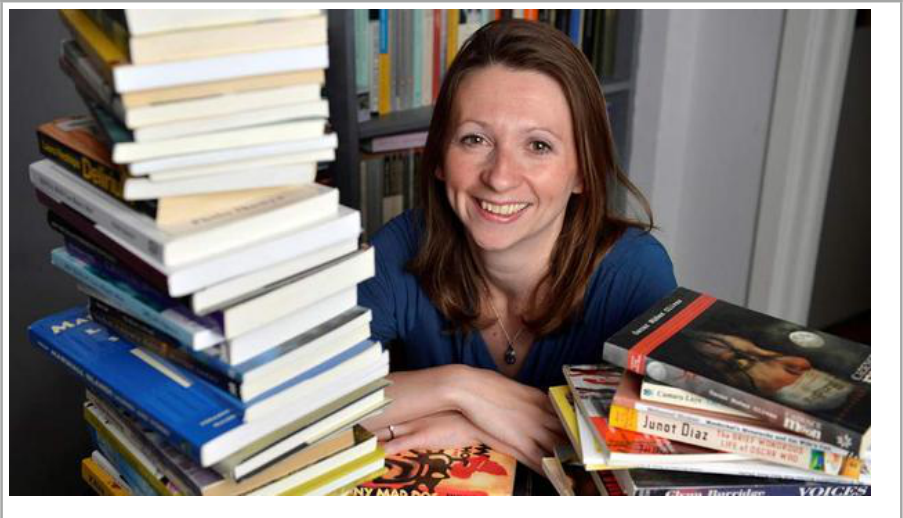
Writer Ann Morgan set herself a challenge – to read a book from every country in the world in one year. She describes the experience and what she learned.
I used to think of myself as a fairly cosmopolitan sort of person, but my bookshelves told a different story. Apart from a few Indian novels and the odd Australian and South African book, my literature collection consisted of British and American titles. Worse still, I hardly ever tackled anything in translation. My reading was confined to stories by English-speaking authors.
So, at the start of 2012, I set myself the challenge of trying to read a book from every country (well, all 195 United Nations (UN) recognised states plus former UN member Taiwan) in a year to find out what I was missing. With no idea how to go about this beyond a sneaking suspicion that I was unlikely to find publications from nearly 200 nations on the shelves of my local bookshop, I decided to ask the planet’s readers for help. I created a blog called A Year of Reading the World and put out an appeal for suggestions of titles that I could read in English.
The response was amazing. Before I knew it, people all over the planet were getting in touch with ideas and offers of help. Some posted me books from their home countries. Others did hours of research on my behalf. In addition, several writers, like Turkmenistan’s Ak Welsapar and Panama’s Juan David Morgan, sent me unpublished translations of their novels, giving me a rare opportunity to read works otherwise unavailable to the 62% of Brits who only speak English. Even with such an extraordinary team of bibliophiles behind me, however, sourcing books was no easy task. For a start, with translations making up only around 4.5 per cent of literary works published in the UK and Ireland, getting English versions of stories was tricky.
But the effort was worth it. As I made my way through the planet’s literary landscapes, extraordinary things started to happen. In the hands of gifted writers, I discovered bookpacking offered something a physical traveller could hope to experience only rarely: it took me inside the thoughts of individuals living far away and showed me the world through their eyes. More powerful than a thousand news reports, these stories not only opened my mind to the nuts and bolts of life in other places, but opened my heart to the way people there might feel.
And that in turn changed my thinking. Through reading the stories shared with me by bookish strangers around the globe, I realised I was not an isolated person, but part of a network that stretched all over the planet. One by one, the country names on the list that had begun as an intellectual exercise at the start of the year transformed into vital, vibrant places filled with laughter, love, anger, hope and fear. Lands that had once seemed exotic and remote became close and familiar to me – places I could identify with. At its best, I learned, fiction makes the world real.
(adapted from <http://www.bbc.com/culture/story/20130715-reading-the-world-in-365-days>)
According to the text, before her experience with the blog the author used to think of herself as a cosmopolitan person.
However, she realised that:
- Ashe needed to buy bookshelves for her new collection of books.
- Bher literature collection consisted mostly of Indian novels.
- Cher reading was limited to books originally written in English.
- Dshe had read a lot of books translated to the English language.
- Eher favourite authors were mostly Indian, Australian and South African.
Você já respondeu questões neste aparelho. Crie sua conta grátis para guardar o histórico e refazer as que errou.
Resposta salva no seu histórico.
Reportar erro na questão
Resolução comentada
A pergunta pede o que a autora percebeu ao contrariar a imagem de pessoa cosmopolita que tinha de si mesma.
O trecho decisivo está no primeiro parágrafo: "my bookshelves told a different story" ("minhas estantes contavam uma história diferente"). Ou seja, a coleção não condizia com a ideia de ser cosmopolita.
Ela então explica o motivo:
- Fora alguns romances indianos e um ou outro livro australiano e sul-africano, a coleção era de títulos britânicos e americanos.
- "I hardly ever tackled anything in translation": quase nunca lia traduções.
- "My reading was confined to stories by English-speaking authors": a leitura se restringia a histórias de autores de língua inglesa.
Portanto, o que ela percebeu é que lia apenas livros escritos originalmente em inglês. Isso corresponde à alternativa C, pois "confined" quer dizer "limitada".
As demais alternativas distorcem o texto: os livros indianos, australianos e sul-africanos eram poucos, ela quase não lia traduções e em nenhum momento fala em comprar estantes.
Alternativa C.
Por que as outras alternativas estão erradas
- AO texto não menciona a necessidade de comprar estantes; elas só servem para revelar o perfil da coleção.
- BOs romances indianos eram poucos ("a few"); a coleção era majoritariamente britânica e americana.
- DContradiz o texto: ela "hardly ever" lia traduções.
- ETransforma a exceção ("a few", "the odd") em preferência; o texto não fala em autores favoritos.
Assunto: Informações explícitas e detalhes.
Reportar erro na resolução
Ver como caiu na prova

Fonte: UFPR 2014 · 1ª fase. Prova oficial ↗