Questão 21 da FUVEST 2017
TEXTO PARA AS QUESTÕES DE 19 A 21
Plants not only remember when you touch them, but they can also make risky decisions that are as sophisticated as those made by humans, all without brains or complex nervous systems.
Researchers showed that when faced with the choice between a pot containing constant levels of nutrients or one with unpredictable levels, a plant will pick the mystery pot when conditions are sufficiently poor.
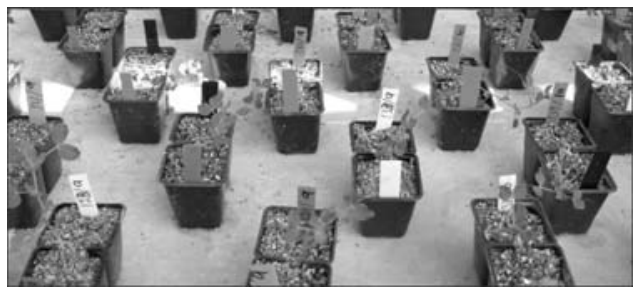
In a set of experiments, Dr. Shemesh, from Tel-Hai College in Israel, and Alex Kacelnik, from Oxford University, grew pea plants and split their roots between two pots. Both pots had the same amount of nutrients on average, but in one, the levels were constant; in the other, they varied over time. Then the researchers switched the conditions so that the average nutrients in both pots would be equally high or low, and asked: Which pot would a plant prefer?
When nutrient levels were low, the plants laid more roots in the unpredictable pot. But when nutrients were abundant, they chose the one that always had the same amount.
The New York Times, June 30, 2016. Adaptado.
De acordo com os experimentos relatados no texto, em condições adversas, as plantas de ervilha priorizaram o crescimento de raízes nos vasos que apresentaram níveis de nutrientes
- Aabundantes.
- Bestáveis.
- Cbásicos.
- Dideais.
- Evariáveis.
Reportar erro na questão
Resolução comentada
A questão pede o que as plantas fizeram em condições adversas, isto é, quando há poucos nutrientes.
O texto diz que, quando a situação é ruim, a planta escolhe o "mystery pot" (o vaso misterioso), aquele com níveis imprevisíveis de nutrientes.
O último parágrafo confirma: "When nutrient levels were low, the plants laid more roots in the unpredictable pot". Em tradução: quando os nutrientes estavam baixos, as plantas criaram mais raízes no vaso imprevisível.
O oposto ocorre quando há abundância: "when nutrients were abundant, they chose the one that always had the same amount", ou seja, o vaso constante.
Assim, condição adversa (poucos nutrientes) leva à escolha do vaso com níveis que variam ao longo do tempo. Em português, "unpredictable" corresponde a "variáveis".
Alternativa E.
Pegadinha: A alternativa B engana quem inverte as condições: a planta só escolhe o vaso constante quando há abundância de nutrientes.
Por que as outras alternativas estão erradas
- ANutrientes abundantes correspondem à condição favorável, na qual as plantas preferiram o vaso constante.
- BVaso estável (constante) foi o escolhido quando havia abundância, não na condição adversa.
- CO texto não fala em níveis "básicos"; é termo inventado que não descreve nenhum dos vasos.
- DNíveis ideais não aparecem no texto e não correspondem à condição adversa.
Assuntos: interpretação de texto em inglês, leitura de texto científico.
Reportar erro na resolução
Ver como caiu na prova