Questão 87 da FUVEST 2016
TEXTO PARA AS QUESTÕES 86 E 87
About half of the world’s population is at risk of contracting dengue, according to the World Health Organization. The mosquito is found in tropical and subtropical climates around the world; however, dengue does not naturally occur in these creatures: the mosquitoes get dengue from us.
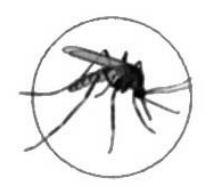
The mechanism of dengue infection is simple. Female mosquitoes bite humans because they need the protein found in our blood to produce eggs. (Male mosquitoes do not bite.) If the mosquito bites someone with dengue – and then, after the virus’s roughly eight- to 12-day replication period, bites someone else – it passes dengue into its next victim’s bloodstream.
There is no vaccine against dengue, but infecting mosquitoes with a natural bacterium called Wolbachia blocks the insects’ ability to pass the disease to humans. The microbe spreads among both male and female mosquitoes: infected females lay eggs that harbor the bacterium, and when Wolbachia*-free females mate with infected males, their eggs simply do not hatch. Researchers are now releasing* Wolbachia*-infected females into the wild in Australia, Vietnam, Indonesia and Brazil.*
Scientific American, June 2015. Adaptado.
Segundo o texto, a bactéria Wolbachia, se inoculada nos mosquitos, bloqueia a transmissão da dengue porque
- Atorna os machos estéreis.
- Binterfere no período de acasalamento dos mosquitos.
- Cimpede a multiplicação do vírus nas fêmeas.
- Dimpede a eclosão dos ovos que contêm o vírus.
- Ediminui a quantidade de ovos depositados pelas fêmeas.
Reportar erro na questão
Ver como caiu na prova