Questão 42 da FUVEST 2015
TEXTO PARA AS QUESTÕES DE 40 A 42
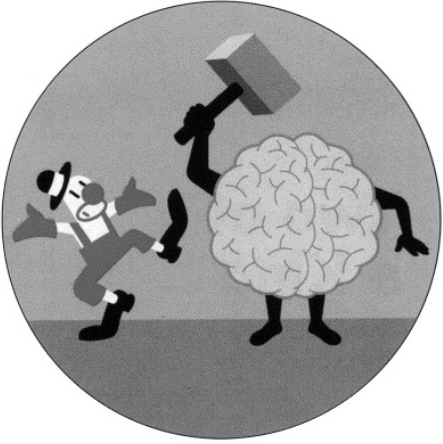
You know the exit is somewhere along this stretch of highway, but you have never taken it before and do not want to miss it. As you carefully scan the side of the road for the exit sign, numerous distractions intrude on your visual field: billboards, a snazzy convertible, a cell phone buzzing on the dashboard. How does your brain focus on the task at hand?
To answer this question, neuroscientists generally study the way the brain strengthens its response to what you are looking for – jolting itself with an especially large electrical pulse when you see it. Another mental trick may be just as important, according to a study published in April in the Journal of Neuroscience*: the brain deliberately weakens its reaction to everything else so that the target seems more important in comparison.*
Such research may eventually help scientists understand what is happening in the brains of people with attention problems, such as attention-deficit/hyperactivity disorder. And in a world increasingly permeated by distractions – a major contributor to traffic accidents – any insights into how the brain pays attention should get ours.
Scientific American, July 2014. Adaptado.
De acordo com o texto, a pesquisa mencionada pode
- Acolaborar para a compreensão de nossas atitudes frente a novas tarefas.
- Bajudar pessoas que possuem diversos distúrbios mentais, ainda pouco conhecidos.
- Cajudar pessoas que, normalmente, são muito distraídas e desorganizadas.
- Dcolaborar para a compreensão do modo como enxergamos o mundo.
- Ecolaborar para a compreensão do que ocorre no cérebro de pessoas com problemas de atenção.
Reportar erro na questão
Resolução comentada
O terceiro parágrafo diz: "Such research may eventually help scientists understand what is happening in the brains of people with attention problems, such as attention-deficit/hyperactivity disorder". Traduzindo: essa pesquisa pode ajudar os cientistas a entender o que acontece no cérebro de pessoas com problemas de atenção, como o TDAH.
É isso que a questão pede: o que a pesquisa pode fazer, segundo o texto.
Agora compare com as alternativas:
- O texto fala em ajudar cientistas a compreender o cérebro, e não em tratar ou ajudar diretamente as pessoas.
- O foco são problemas de atenção, e não distúrbios mentais em geral.
- O estudo trata de como o cérebro filtra distrações, sem mencionar atitudes diante de tarefas novas nem a visão do mundo de modo geral.
A alternativa E reproduz quase literalmente a ideia do trecho: compreender o que ocorre no cérebro de quem tem problemas de atenção.
Alternativa E.
Por que as outras alternativas estão erradas
- AO texto usa a tarefa de achar a saída da estrada só como exemplo, sem falar em atitudes diante de novas tarefas como objetivo da pesquisa.
- BGeneraliza para "diversos distúrbios mentais", mas o texto cita apenas problemas de atenção, como o TDAH.
- CO texto não fala em ajudar pessoas distraídas ou desorganizadas, e sim em ajudar cientistas a entender o cérebro.
- DO texto não fala em compreender como enxergamos o mundo; trata de como o cérebro foca a atenção e ignora distrações.
Assuntos: interpretação de texto, inglês.
Reportar erro na resolução
Ver como caiu na prova