PRÁTICA COM QUESTÕES OFICIAIS
Questão 84 da FUVEST 2004
Texto para as questões de 81 a 84 · V
From Susan Blackmore
In his article on computers and consciousness, Igor Aleksander was quite wrong to say that “Susan Blackmore...implies that constructing a machine that is conscious like us would be impossible” (19 July, p 40).
I do indeed claim that consciousness is an illusion. This is because it feels to us humans as though there is a continuous flow of experiences happening to an inner self, when in fact, there is no such inner self. Computers have no inner self either, but if ever they start thinking they do they will become deluded like us, and hence conscious like us. And that day is surely not far off.
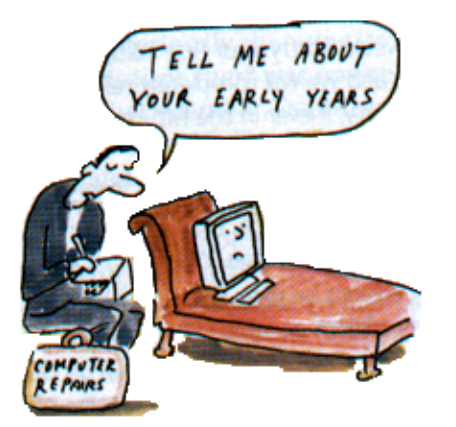
We humans can sometimes wake up from our delusion, through intellectual insight or through practices like meditation. Maybe future computers will teach us a thing or two about waking up from illusion.
Bristol, UK
(New Scientist, August 9, 2003)
According to the text, one day
English is a colonial language that continued to be the official language after independence in virtually all African countries that were under British rule. In some cases it was retained to avoid ethnic tensions. But in all cases it was retained because of its prestige and association with power. In contrast, the vernaculars were viewed as backward and inferior, and so were not developed. Students were made to feel ashamed of their mother tongue and punished for speaking it.
In Kenya, for example, speaking in vernacular was forbidden and sanctioned in schools. One popular method of punishment was to make pupils carry around a skull of some dead animal the whole day as a way of embarrassing the pupil who dared speak in his mother tongue.
Today it is difficult to use indigenous languages because they have not developed, been codified and standardised. Hence there is a shortage of teaching materials and trained teachers in the vernaculars. And this has often been used as an excuse for not adopting the vernaculars in schools.
(The Guardian Weekly, August 2003)
- Acomputers will be prepared to think the same way we do.
- Bcomputers may understand consciousness limitations better.
- Chuman beings will program computers which will help them meditate.
- Dhuman beings will wake up and have better insights towards computers.
- Ecomputers may teach humans how to deal with their illusions better.
Você já respondeu questões neste aparelho. Crie sua conta grátis para guardar o histórico e refazer as que errou.
Resposta salva no seu histórico.
Reportar erro na questão
Resolução comentada
A resposta está no último parágrafo do texto de Susan Blackmore, que trata da consciência humana e dos computadores. O trecho sobre línguas africanas não se relaciona às alternativas desta questão.
Para a autora, a consciência é uma ilusão: sentimos que existe um “eu interior” acompanhando continuamente nossas experiências, mas esse eu não existiria de fato. Se os computadores passarem a acreditar que também possuem esse eu, terão uma ilusão semelhante à nossa.
O trecho decisivo é: “Maybe future computers will teach us a thing or two about waking up from illusion” — “Talvez os computadores do futuro nos ensinem algumas coisas sobre despertar da ilusão”.
Portanto, a previsão é que os computadores talvez ensinem os humanos a lidar melhor com suas ilusões, como afirma E. O verbo may mantém a ideia de possibilidade expressa por maybe. Não há afirmação de que humanos programarão computadores para ajudá-los a meditar: a meditação aparece apenas como uma prática humana capaz de favorecer esse despertar.
Alternativa E.
Por que as outras alternativas estão erradas
- AO texto prevê uma possível ilusão semelhante à humana, não uma preparação para pensar exatamente como nós.
- BA previsão final é que computadores possam ensinar humanos a despertar da ilusão, não compreender melhor as limitações da consciência.
- CA meditação é citada como prática humana, sem referência à programação de computadores para auxiliá-la.
- DO despertar mencionado é da ilusão do eu interior, não uma melhora da compreensão humana sobre computadores.
Assunto: Tema, ideia central e informações explícitas.
Reportar erro na resolução
Ver como caiu na prova
Fonte: FUVEST 2004. Prova oficial ↗