PRÁTICA COM QUESTÕES OFICIAIS
Questão 14 da FAMERP 2026
Leia o texto para responder às questões de 11 a 15. · Conhecimentos Gerais
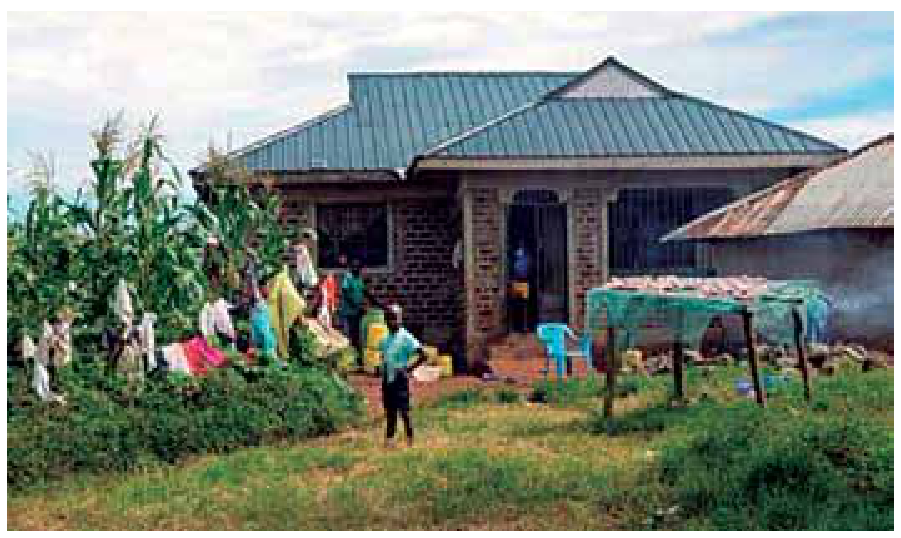
Of every 1,000 children born in Kenya, a country in East Africa, 32 don’t make it to their first birthdays. Study after study has explored how to improve those impressive numbers, in Kenya and elsewhere. But a decade-long study on alleviating poverty found a simple solution. Giving $1,000 to poor families lowered infant mortality rates by nearly half, and deaths in children under 5 by 45 percent. Those are much bigger drops than have been credited to routine immunizations, for example, or bed nets to prevent malaria.
“This is easily the biggest impact on child survival that I’ve seen from an intervention that was designed to alleviate poverty,” said Harsha Thirumurthy, an economist at the University of Pennsylvania who was not involved in the work. The decline in infant mortality is a “showstopping result,” he said.
The outcomes suggest that delivering even smaller amounts of money to families — especially those that live near a hospital — immediately before or after the birth of a child might allow women to seek medical care and drastically improve their children’s chances of survival. More than 100 low- and middle-income countries have explored so-called cash transfers, especially after the pandemic began. Generally, the experiments have found that giving money to poor families improves school attendance, nutrition and use of health services.
(Apoorva Mandavilli. www.nytimes.com, 18.08.2025. Adaptado.)
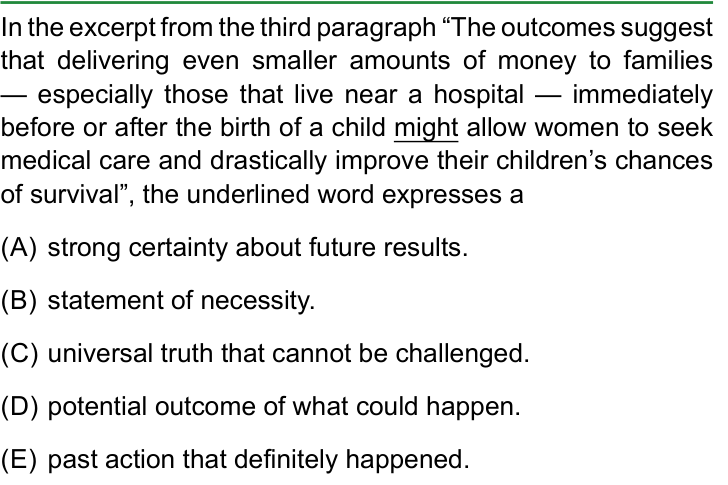
In the excerpt from the third paragraph “The outcomes suggest that delivering even smaller amounts of money to families — especially those that live near a hospital — immediately before or after the birth of a child might allow women to seek medical care and drastically improve their children’s chances of survival”, the underlined word expresses a
- Astrong certainty about future results.
- Bstatement of necessity.
- Cuniversal truth that cannot be challenged.
- Dpotential outcome of what could happen.
- Epast action that definitely happened.
Você já respondeu questões neste aparelho. Crie sua conta grátis para guardar o histórico e refazer as que errou.
Resposta salva no seu histórico.
Reportar erro na questão
Resolução comentada
O verbo modal might é usado para expressar possibilidade, algo que talvez aconteça, mas sem garantia. É mais fraco que may e muito mais fraco que will ou must.
No trecho, o autor não afirma que dar menos dinheiro às famílias vai melhorar a sobrevivência das crianças. Ele diz que os resultados sugerem ("suggest") que isso poderia permitir que as mães buscassem atendimento médico. A própria palavra "suggest" já indica hipótese, e might reforça essa ideia.
Veja o que o modal não indica:
- Certeza: seria will ou definitely.
- Necessidade ou obrigação: seria must ou need to.
- Verdade universal: seria o presente simples, sem modal.
- Passado concreto: might aqui se refere a um efeito possível e hipotético, não a um fato já ocorrido.
Logo, might indica um resultado potencial, algo que poderia acontecer caso as transferências de dinheiro fossem feitas.
Alternativa D.
Por que as outras alternativas estão erradas
- Amight expressa possibilidade incerta, não forte certeza; para certeza usaríamos will ou must.
- Bnecessidade seria expressa por must, need ou have to, não por might.
- Co trecho fala de resultado hipotético sugerido por um estudo, não de verdade universal indiscutível.
- Emight no trecho se refere a efeito possível e hipotético, não a ação passada que certamente ocorreu.
Assunto: Tempos verbais e verbos modais.
Reportar erro na resolução
Ver como caiu na prova
Fonte: FAMERP 2026 · Conhecimentos Gerais. Prova oficial ↗