PRÁTICA COM QUESTÕES OFICIAIS
Questão 33 da FAMEMA 2027
Leia o texto para responder às questões de 31 a 33. · Prova II
With so many shopping occasions and targeted social media advertisements, it’s easy for consumers to get carried away by the many deals and discounts available these days. Knowing the mechanisms that work behind the scenes, consumers should be careful not to be tempted too much by what are often just allegedly “the best deals of the year”. In many cases, it makes sense to hold on for a second before hitting that checkout button, because regardless of potential savings there is such a thing as too many clothes or too many gadgets, to name just two popular online shopping categories. According to a consumer market research survey, many consumers admit to often buying clothes they never wear. In these cases, they could have saved 100 percent off the retail price by simply resisting the impulse to buy.
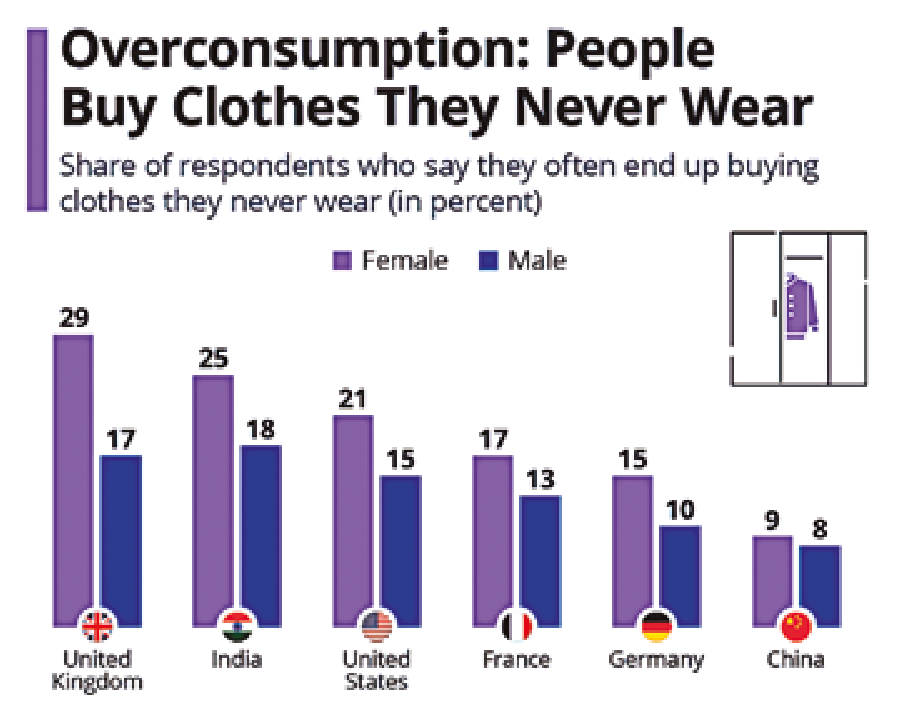
(Felix Richter. www.statista.com, 22.05.2025. Adaptado.)
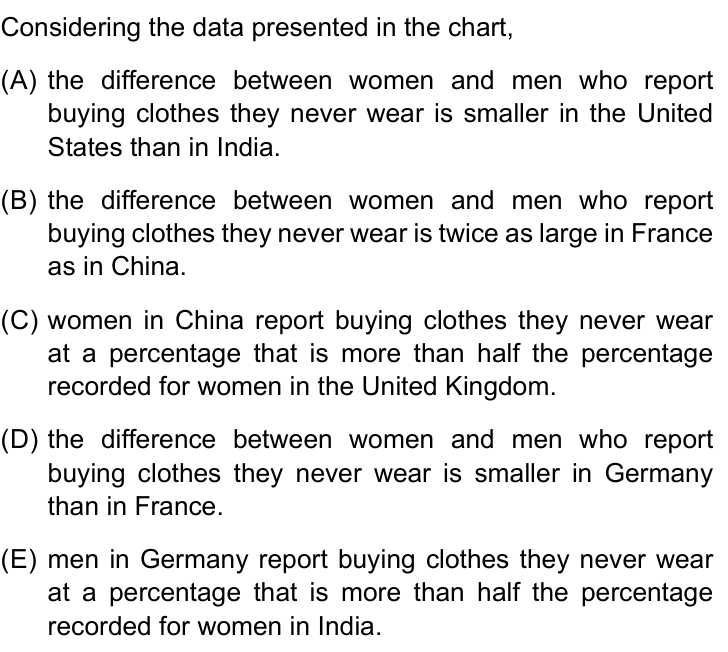
Considering the data presented in the chart,
- Athe difference between women and men who report buying clothes they never wear is smaller in the United States than in India.
- Bthe difference between women and men who report buying clothes they never wear is twice as large in France as in China.
- Cwomen in China report buying clothes they never wear at a percentage that is more than half the percentage recorded for women in the United Kingdom.
- Dthe difference between women and men who report buying clothes they never wear is smaller in Germany than in France.
- Emen in Germany report buying clothes they never wear at a percentage that is more than half the percentage recorded for women in India.
Você já respondeu questões neste aparelho. Crie sua conta grátis para guardar o histórico e refazer as que errou.
Resposta salva no seu histórico.
Reportar erro na questão
Resolução comentada
Primeiro calcule a diferença entre mulheres e homens em cada país, lendo o gráfico:
- Reino Unido: 29-17=12
- Índia: 25-18=7
- Estados Unidos: 21-15=6
- França: 17-13=4
- Alemanha: 15-10=5
- China: 9-8=1
Agora teste cada alternativa.
(A) EUA (6) é menor que Índia (7): verdadeiro.
(B) França (4) é o dobro da China (1)? Não, é o quádruplo.
(C) Metade de 29 é 14,5; as mulheres chinesas têm 9, que é menos da metade. Falso.
(D) Alemanha (5) menor que França (4)? Não, é maior. Falso.
(E) Metade de 25 é 12,5; os homens alemães têm 10, menos da metade. Falso.
Só a (A) confere com os dados.
Alternativa A.
Por que as outras alternativas estão erradas
- BA diferença na França (4) é quatro vezes a da China (1), não o dobro.
- C9% é menos da metade de 29% (14,5%).
- DA diferença na Alemanha (5) é maior que a da França (4), não menor.
- E10% é menos da metade de 25% (12,5%).
Assunto: Anúncios, cartazes e infográficos.
Reportar erro na resolução
Ver como caiu na prova
Fonte: FAMEMA 2027 · Prova II. Prova oficial ↗