Questão 35 da FAMEMA 2026
Leia o texto para responder às questões de 31 a 35. · Prova II
Newspaper sales have been in decline for decades, and most Americans now prefer to get news from digital devices. In this environment, many news organizations — and not just newspapers — put paywalls1 on their websites or apps, blocking access to articles or other content unless news consumers pay or subscribe.
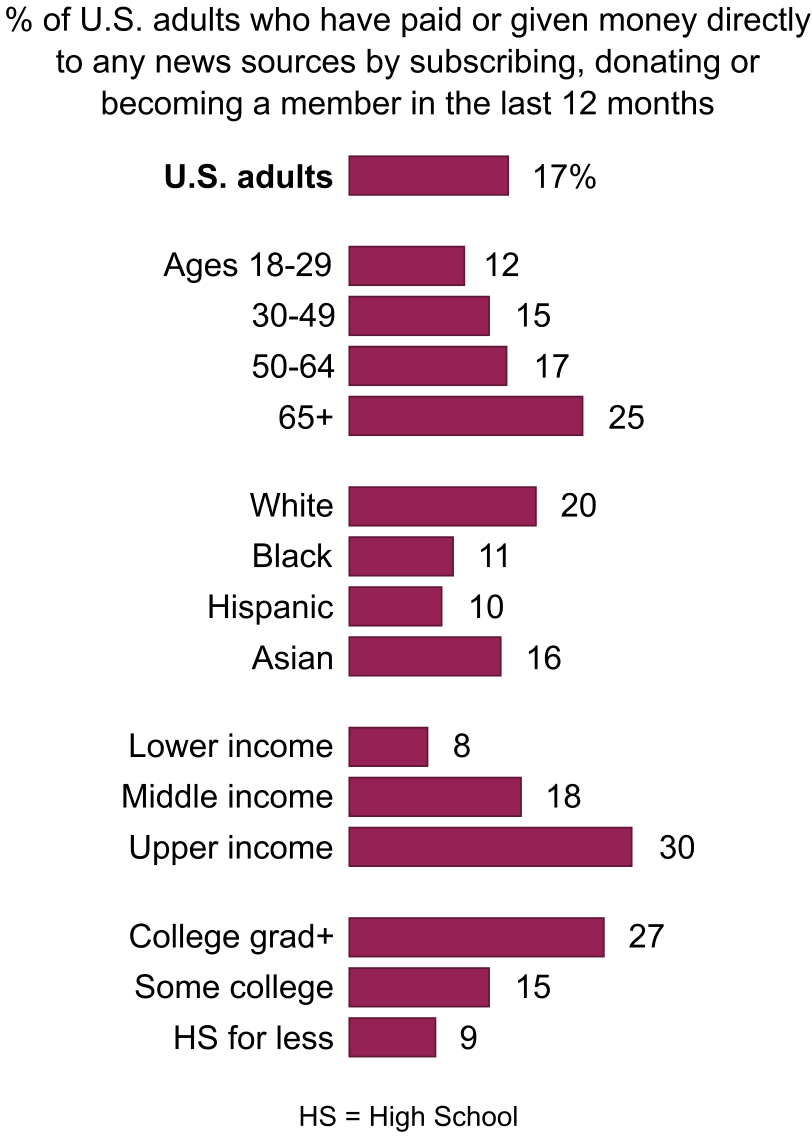
The vast majority of Americans (83\%) say they have not paid for news in 2024, according to a survey. Another 17\% say they have directly paid or given money to a news source by subscribing, donating or becoming a member during that time.
Among the 83\% of United States (U.S.) adults who have not paid for news in 2024, the most common reason they cite is that they can find plenty of other news articles for free. About half of those who don’t pay for news (49\%) say this is the main reason.
Another common reason people don’t pay for news is that they are not interested enough (32\%). Smaller shares of Americans who don’t pay for news say the main reason is that it’s not affordable (10\%) or that the news provided isn’t good enough to pay for (8\%).
(Emily Tomasik and Michael Lipka. www.pewresearch.org. Adaptado.)
1 paywalls: programs that stop people who have not paid a subscription from using a website.
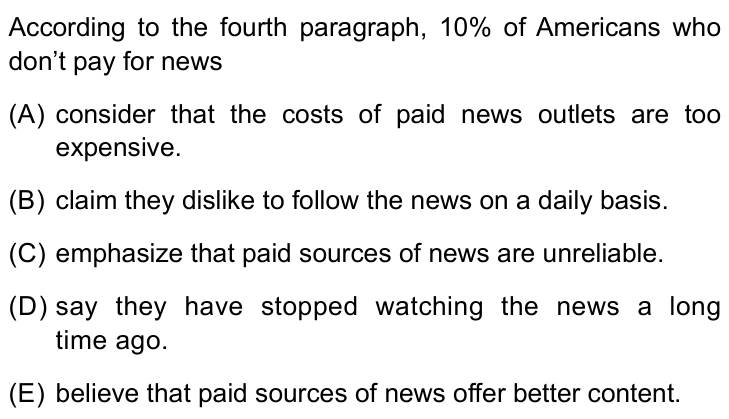
According to the fourth paragraph, 10% of Americans who don’t pay for news
- Aconsider that the costs of paid news outlets are too expensive.
- Bclaim they dislike to follow the news on a daily basis.
- Cemphasize that paid sources of news are unreliable.
- Dsay they have stopped watching the news a long time ago.
- Ebelieve that paid sources of news offer better content.
Reportar erro na questão
Ver como caiu na prova
Fonte: FAMEMA 2026 · Prova II. Prova oficial ↗