Questão 31 da FAMEMA 2025
Leia o texto para responder às questões de 31 a 33. · Prova II
A gender stereotype is a generalized view or preconception about attributes or characteristics, or the roles that are or ought to be possessed by, or performed by, women and men. A gender stereotype is harmful when it limits women’s and men’s capacity to develop their personal abilities, pursue their professional careers and/or make choices about their lives.
Whether clearly hostile (such as “women are irrational”) or seemingly benign (“women are nurturing”), harmful stereotypes perpetuate inequalities. For example, the traditional view of women as care givers means that child care responsibilities often fall exclusively on women.
Further, gender stereotypes compounded and intersecting with other stereotypes have a disproportionate negative impact on certain groups of women, such as women from minority or indigenous groups, women with disabilities or with lower economic status, migrant women etc.
(https://ohchr.org. Adaptado.)
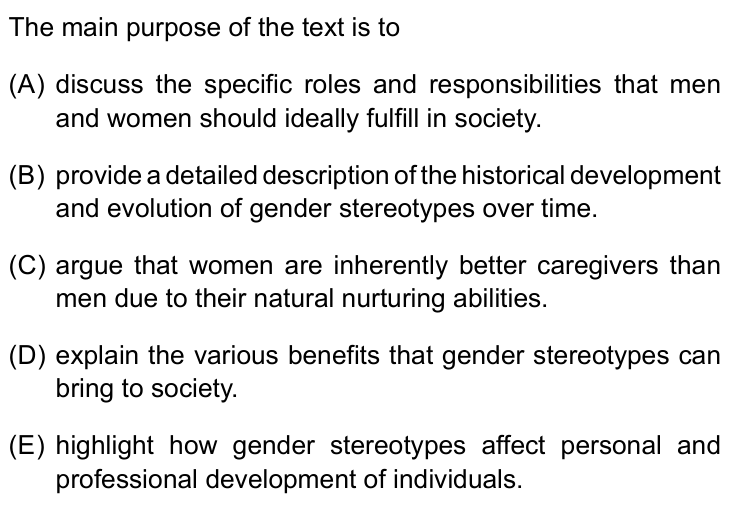
The main purpose of the text is to
- Adiscuss the specific roles and responsibilities that men and women should ideally fulfill in society.
- Bprovide a detailed description of the historical development and evolution of gender stereotypes over time.
- Cargue that women are inherently better caregivers than men due to their natural nurturing abilities.
- Dexplain the various benefits that gender stereotypes can bring to society.
- Ehighlight how gender stereotypes affect personal and professional development of individuals.
Reportar erro na questão
Ver como caiu na prova
Fonte: FAMEMA 2025 · Prova II. Prova oficial ↗