Questão 9 (1º semestre) do São Camilo 2026
Leia o texto para responder às questões de 06 a 09. · Prova II
Artificial intelligence (AI) is not new to the workplace, but the debut of ChatGPT ushered in an era of rapid expansion. American workers have mixed feelings about how this technology will affect jobs in the future.
About half of workers (52%) say they’re worried about the future impact of AI use in the workplace, and 32% think it will lead to fewer job opportunities for them in the long run, according to a new survey. And while 36% of workers also say they feel hopeful about how AI may be used in the workplace in the future, a similar share (33%) say they feel overwhelmed.
About one-in-six workers (16%) say at least some of their work is currently done with AI. And an additional 25% say, while they’re not using it much now, at least some of their work can be done with AI. These shares are significantly higher among young workers and workers with at least a bachelor’s degree.
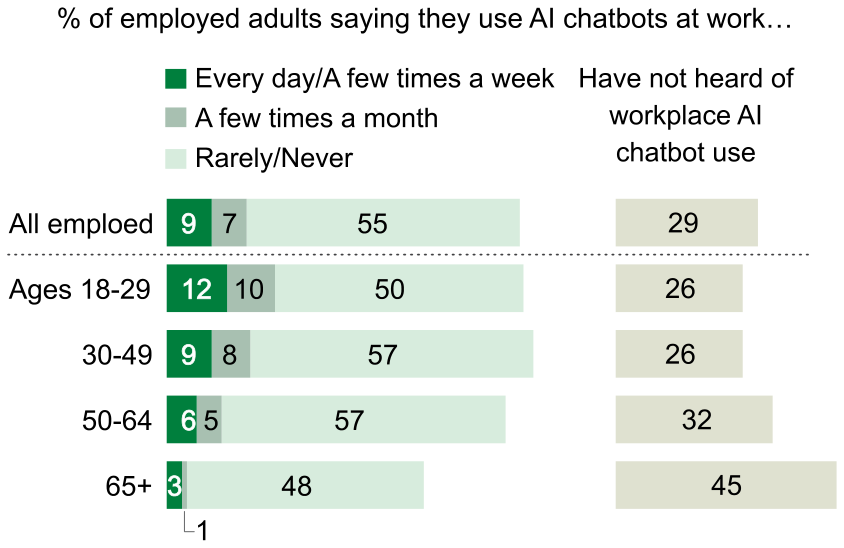
About one-in-ten workers say they use AI chatbots — such as ChatGPT, Gemini or Copilot — at work every day or a few times a week; 7% use them a few times a month.
(Luona Lin and Kim Parker. www.pewresearch.org, 25.02.2025. Adaptado.)
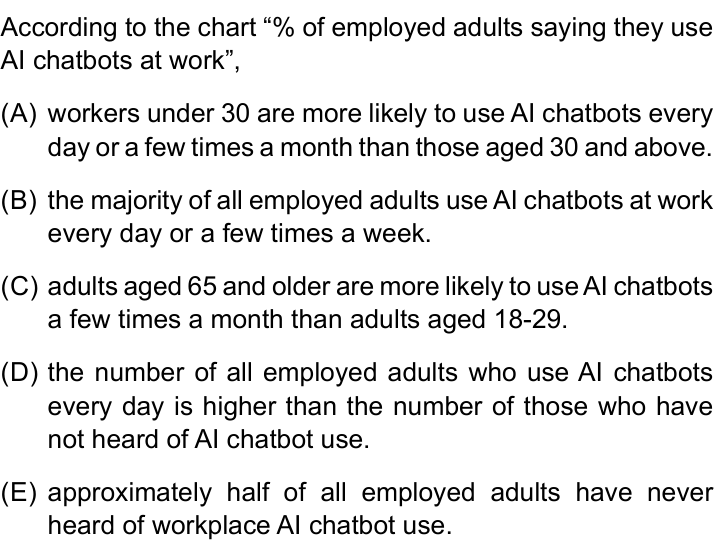
According to the chart “% of employed adults saying they use AI chatbots at work”,
- Aworkers under 30 are more likely to use AI chatbots every day or a few times a month than those aged 30 and above.
- Bthe majority of all employed adults use AI chatbots at work every day or a few times a week.
- Cadults aged 65 and older are more likely to use AI chatbots a few times a month than adults aged 18-29.
- Dthe number of all employed adults who use AI chatbots every day is higher than the number of those who have not heard of AI chatbot use.
- Eapproximately half of all employed adults have never heard of workplace AI chatbot use.
Reportar erro na questão
Ver como caiu na prova
Fonte: São Camilo 2026 · 1º semestre · Prova II. Prova oficial ↗